Interiors
Original Hardwood Floors in an Older Haddonfield Home: Refinish, Repair or Keep the Patina?
Most tired old floors need a fresh coat of finish, not a full sanding. Here's how to tell the difference, and how to keep the gaps down this winter.
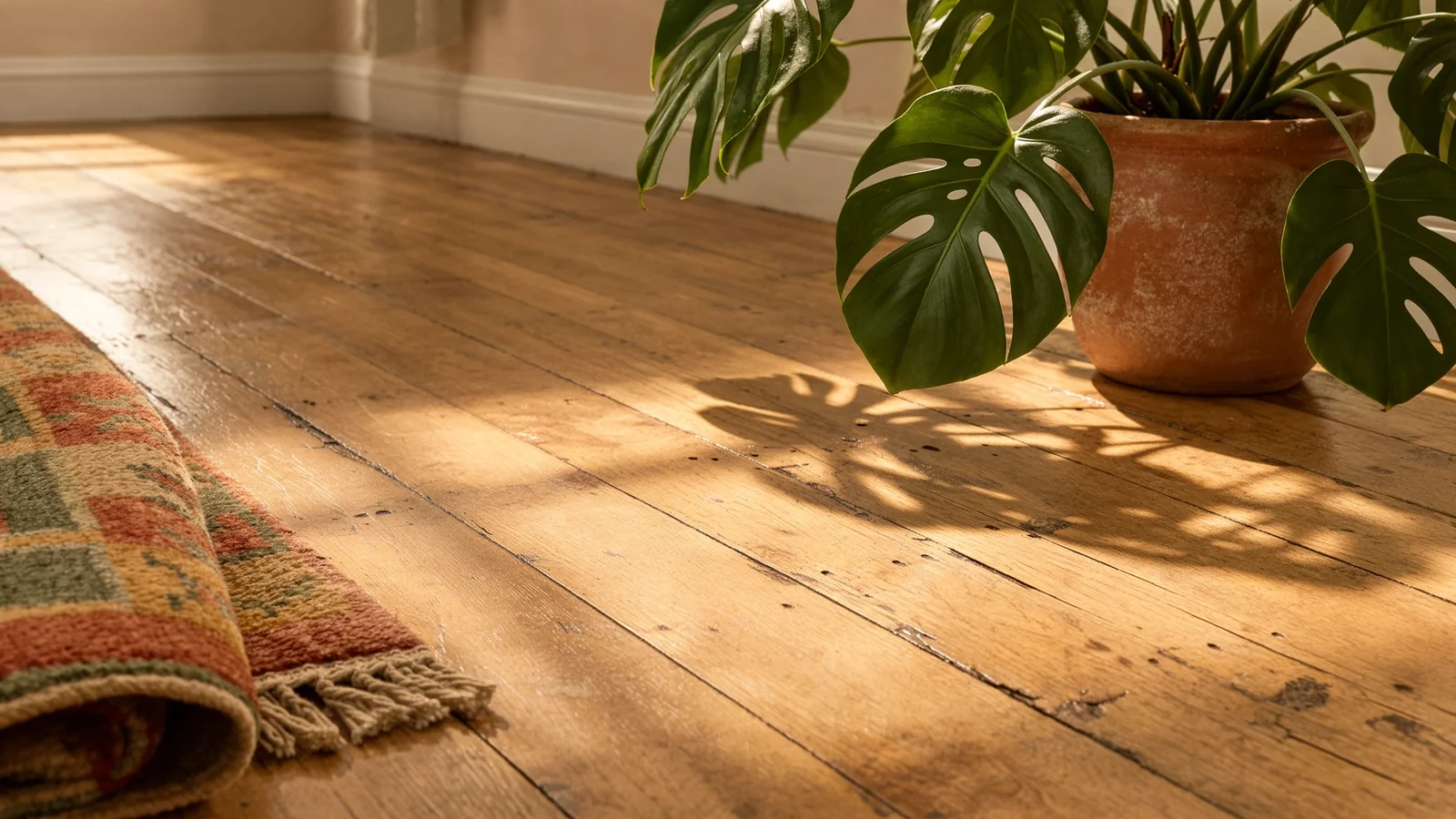
If your older Haddonfield house still has its original wood floors, don't rush to sand them. A dull but intact finish usually just needs a maintenance coat, a light sanding of the finish and a fresh coat on top. Save a full sand and refinish for deep scratches, dents or spots worn down to bare wood, because every sanding takes some of the floor with it.
Why the old floor is worth keeping
The National Park Service's Preservation Brief 18, on historic interiors, lists flooring among the features that define an old building's character, right alongside mantels, baseboards and plaster. Its advice is to retain and preserve them. A worn path down the hall is part of the house's story.
Option 1: a maintenance coat
The National Wood Flooring Association describes a maintenance coat this way: a pro cleans the existing finish, lightly sands it, then applies a new coat of finish. It's the fix for floors that look tired, dull or lightly scuffed. It renews the surface without cutting into the wood.
Option 2: a full sand and refinish
NWFA recommends a complete sand and refinish when there are deep scratches, dents or other damage, or when the finish has worn away and bare wood shows. It's also your chance to change the color.
How many times can a floor take it? NWFA won't give a single number. It depends on the contractor's skill, the equipment, the thickness of the wear layer, how flat the floor is and its condition. It also notes that some wood floors more than 300 years old are still in service. On an old floor that's already been sanded a few times, that's a reason to hire someone careful and to ask how much wood is left before they start.
Repair, don't replace
NWFA says touch-up markers, stain pens and repair kits handle minor surface scratches, and a pro can take on bigger repairs. Patching in matching boards keeps the rest of the original floor in place.
If you're doing other work in the house, protect the floors first. Brief 18 says floors and stairs take heavy wear during construction, and that a protective covering is usually the best and least costly approach.
The winter gap question
Heating season is when old floors open up. NWFA explains that wood loses moisture in dry air and shrinks, so gaps or splits can appear. Gaps that come and go with the seasons are normal. Big gaps that don't close in humid months are a reason to call a pro. NWFA suggests keeping the house between 60 and 80 degrees and 30 to 50 percent humidity year round, which often means running a humidifier.
Winter also brings salt. NWFA warns it leaves a white, abrasive residue that scratches finish, so put mats inside and out, dust mop often and wipe up puddles right away. Felt pads under furniture help too.
Painted floors and lead
Some old houses have painted borders, stairs or back rooms. In a house built before 1978, treat that paint as possible lead before anyone sands it. Our guide to choosing paint colors for an older home covers what the Park Service says about old paint, and caring for old plaster and radiators covers the rest of the winter checklist.
Do I need borough approval?
The borough's Historic Preservation Commission FAQ says the Certificate of Appropriateness covers exterior changes in the Historic District. Floors inside aren't on that list.
The Friday newsletter is where we put old house tips like this, plus the week's town news, in one short read. Subscribe here.
Sources
FAQ
- Should I sand my old hardwood floors or just recoat them?
- If the finish is dull but intact, the National Wood Flooring Association says a maintenance coat may be enough. A full sand and refinish is for deep scratches, dents, or finish worn through to bare wood.
- Why do my floorboards gap in winter?
- Wood loses moisture in dry heated air and shrinks. NWFA says seasonal gaps that close again in humid months are normal, and suggests 60 to 80 degrees and 30 to 50 percent humidity year round.
- Do I need Historic Preservation Commission approval to refinish floors inside?
- The borough's HPC FAQ ties the Certificate of Appropriateness to exterior changes in the Historic District. Interior floor work isn't on that list.
Get Live Haddonfield in your inbox
The best of life in 08033, every Friday. Free.
Subscribe on SubstackMore from Homes & Design
- Heat Pump and Insulation Rebates for Haddonfield Homes: What PSE&G Pays in 2026
Thinking about a heat pump or finally insulating that drafty attic? Here's what PSE&G posts for rebates, who qualifies, and the free first step.
- Haddonfield Friends Meeting House: How to Read the 1851 Quaker Brick on Friends Avenue
Plain on purpose. The 1851 meeting house at Friends Avenue and Lake Street tells the story of a split, a reunion and a town that grew up around Quakers.