Gardens
Feeding Winter Birds in Haddonfield: Which Seed, Which Feeder, Native Plants and What to Skip
Black-oil sunflower, a clean feeder and a few native shrubs with winter fruit. Here's what Cornell and Rutgers say works, and what to leave out.
Get Live Haddonfield free every Friday. Subscribe.
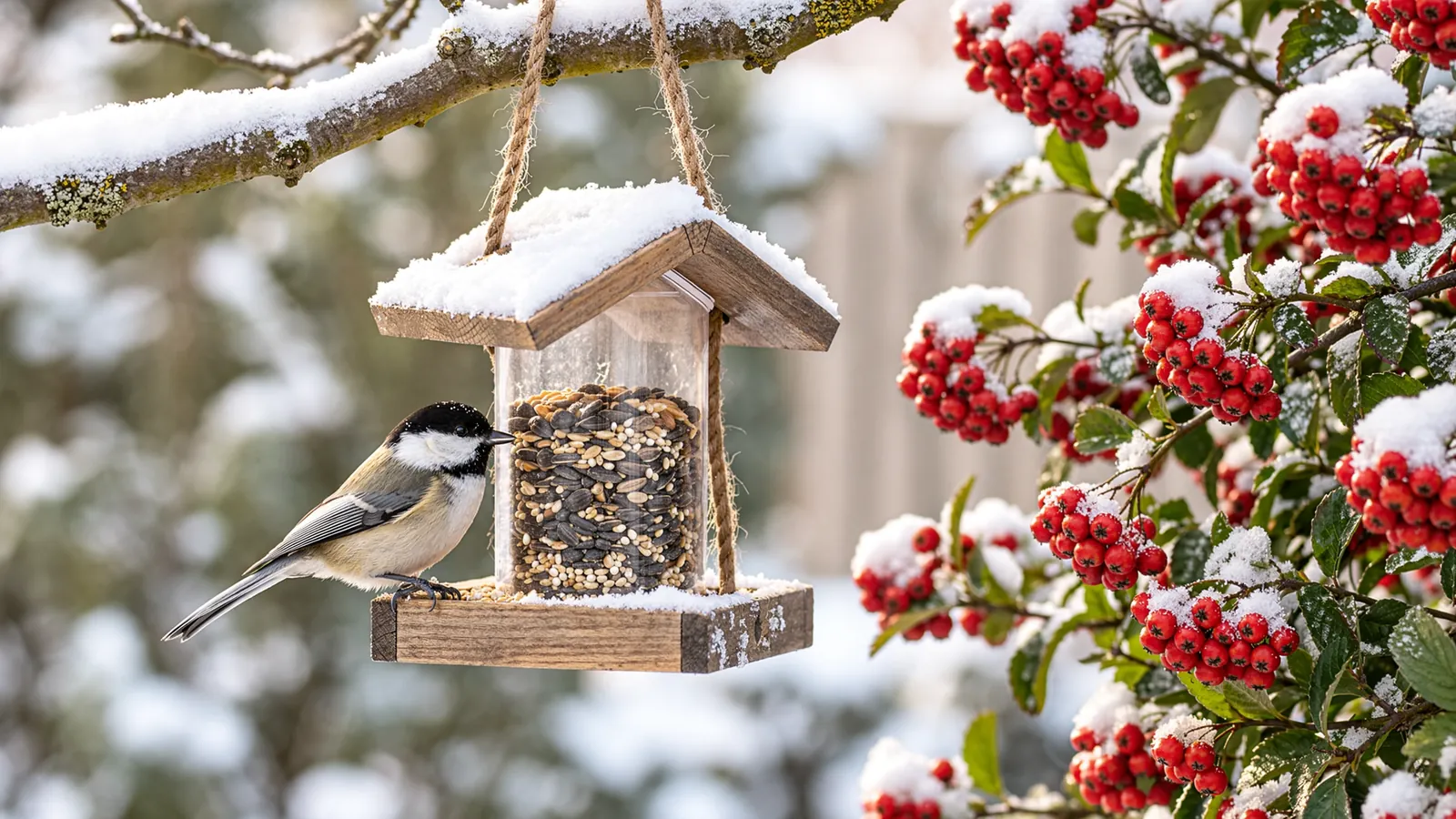
Winter is when a backyard feeder earns its keep in Haddonfield. Black-oil sunflower seed in a clean feeder will draw cardinals, chickadees and finches, and a few native shrubs with winter fruit do even more. Here's what Cornell's Project FeederWatch and Rutgers Cooperative Extension recommend, and what to skip.
Start with black-oil sunflower
Project FeederWatch, run by the Cornell Lab of Ornithology, calls black-oil sunflower the most common feeder seed in North America. The shells are thin and the seed is high in energy. Cardinals, chickadees, finches and sparrows all go for it.
A few other foods worth knowing:
- Hulled sunflower. Less mess under the feeder. Keep it dry, since it spoils faster than seed in the shell.
- Suet in a cage feeder for woodpeckers, nuthatches and chickadees.
- Nyjer for goldfinches. It needs a feeder with tiny ports, and FeederWatch says to offer it by itself, not in a mix.
- Millet scattered on the ground or a low tray for juncos and sparrows.
- Peanuts, raw or roasted, for jays, titmice and nuthatches.
Match the feeder to the bird
FeederWatch says tube feeders keep seed fairly dry and suit small birds. Hoppers draw most feeder birds. Some species, like song sparrows, rarely land on a feeder at all and will eat what falls to the ground. A low platform with drainage holes works for them.
What to skip
- Cheap mixes heavy on milo, the reddish round grain. FeederWatch says most eastern birds don't eat it and it goes to waste.
- Salted or flavored peanuts. Plain only.
- Anything moldy. Toss moldy peanuts, seed or fruit right away. Some molds make toxins that hurt birds.
- Untested additives in bird food. FeederWatch says it discourages them.
Keep it clean
FeederWatch's rule of thumb is to clean seed and suet feeders every week or two, more often in heavy use or wet weather. Take the feeder apart, scrub it with warm water and dish soap, rinse and let it dry completely. For a deeper clean, it suggests soaking the clean parts for 10 minutes in one part bleach to nine parts water, then rinsing well.
Rake up the hulls and droppings under the feeder, too. Spilled seed draws rodents. Wear gloves, and wash your hands after.
Plant for winter food
Feeders help, but Rutgers Cooperative Extension says native plants offer birds food, cover and shelter all year. In its fact sheet on backyard bird habitat, Rutgers lists plants that hold fruit or seed into winter, including:
- Eastern red cedar, rated excellent for winter food and cover
- Nannyberry, a viburnum with black fruit in late fall and winter
- Virginia rose, whose hips keep their color all winter
- Virginia creeper, a vine with fall and winter fruit
- Red and white oaks, for acorns and the insects they host
Rutgers also says a heated birdbath can help when other water is frozen. Now is a good time to plan spring planting. Our late November garden jobs and leave the leaves pieces cover what to leave standing for birds now.
Bird flu and backyard chickens
Cornell's College of Veterinary Medicine says most people don't need to take feeders down, because bird flu is very rare in the songbirds that visit them. The exception is households that also raise poultry. They should take feeders down.
That matters here. Haddonfield allows licensed backyard chickens under Chapter 69 of the borough code. If you keep a flock, skip the feeder.
Don't handle sick or dead wild birds. For wildlife concerns, the borough's pet licensing page lists its animal control officer, Independent Animal Care Services, at 855-488-7226.
Count your birds
Project FeederWatch runs from Nov. 1 through April 30, so this season is already underway. You sign up with the Cornell Lab, which charges a participant fee, then count the birds in your yard on two-day stretches you pick. Even one count all season helps, the project says.
Sources
- Project FeederWatch: Feeding Birds (read Nov. 26, 2026)
- Project FeederWatch: How to Participate
- Rutgers Cooperative Extension FS1011, Landscaping to Create Backyard Bird Habitat (PDF)
- Cornell College of Veterinary Medicine: HPAI and wildlife
- Haddonfield Code, Chapter 69, Article VI (backyard chickens)
- Borough of Haddonfield: Pet Licensing and animal control
The Friday newsletter has one easy yard or garden idea each week, timed to what's actually happening outside. Subscribe here.
FAQ
- What is the best all-purpose bird seed?
- Black-oil sunflower. Project FeederWatch calls it the most common feeder seed in North America and a favorite of cardinals, chickadees, finches and sparrows.
- How often should I clean my bird feeder?
- Every week or two, and more often in heavy use or wet weather, per Project FeederWatch. Wash with warm water and dish soap and let it dry completely.
- Should I take my feeders down because of bird flu?
- For most people, no, per Cornell's College of Veterinary Medicine. The exception is households that also keep poultry, such as backyard chickens.
Get Live Haddonfield in your inbox
The best of life in 08033, every Friday. Free.
Subscribe on SubstackMore from Homes & Design
- Smoke and Carbon Monoxide Alarms in an Older Haddonfield Home: What NJ Requires in 2026 and Where They Go
Older Haddonfield houses have boilers, chimneys and attached garages, and a lot of them still have old alarms. Here's what state rules require and where each alarm belongs.
- New Haddonfield Listing: 177 Upland, a Gill Tract Rancher With a Finished Lower Level for $1,599,000
A custom stone and brick rancher on a corner lot near Tavistock, listed Nov. 23. Here are the numbers, the taxes and who to call.