Interiors
Smoke and Carbon Monoxide Alarms in an Older Haddonfield Home: What NJ Requires in 2026 and Where They Go
Older Haddonfield houses have boilers, chimneys and attached garages, and a lot of them still have old alarms. Here's what state rules require and where each alarm belongs.
Get Live Haddonfield free every Friday. Subscribe.
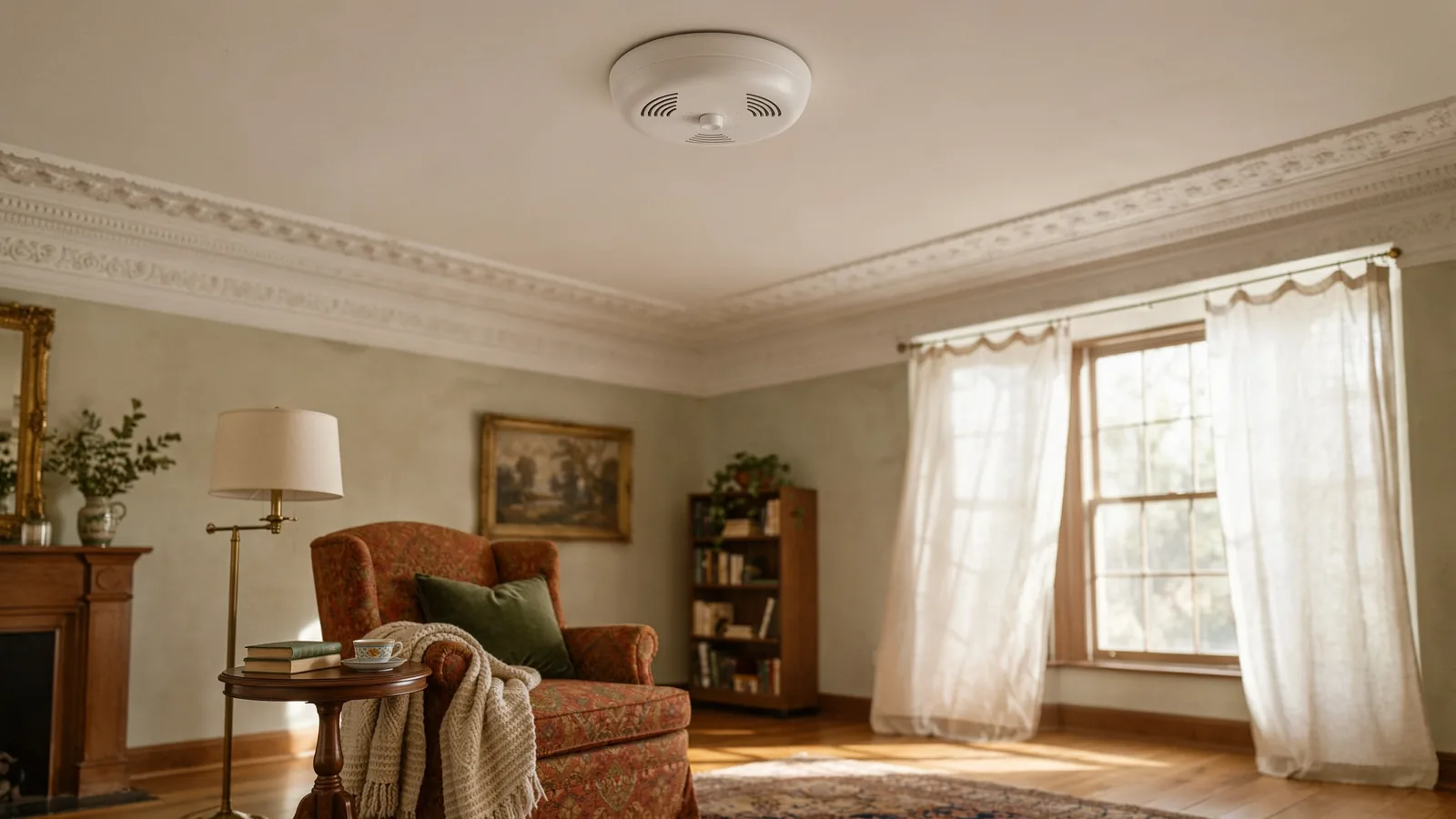
If your Haddonfield house was built before 1977, New Jersey expects battery-only smoke alarms to be the 10-year sealed kind, and you need carbon monoxide alarms near the bedrooms if you have a fuel-burning appliance, like a gas or oil boiler or furnace, or an attached garage. The state checks this before any sale or rental. The National Fire Protection Association's placement advice goes further, and it's good advice even if you're staying put.
Why older homes are different
The state Department of Community Affairs says homes built after Jan. 1, 1977 must have hardwired smoke alarms under the building code. Older homes often don't. So since Jan. 1, 2019, battery-only alarms in those homes must be 10-year sealed battery models before a sale or change of occupancy. You can't pull the battery out, which is the point. DCA says combination smoke and CO units must be the sealed type too.
Have original hardwired alarms? The state rule says don't swap them for battery units.
What New Jersey requires
Under the state fire code for one- and two-family homes (N.J.A.C. 5:70-4.19):
- Smoke alarms on each level and outside each separate sleeping area, placed per NFPA 72. They don't have to be interconnected.
- CO alarms in the immediate vicinity of the sleeping areas, listed to UL 2034. Battery, hardwired or plug-in is fine. Not required if the house has no fuel-burning device and no attached garage.
- A fire extinguisher rated at least 2A-10B:C, 10 pounds or less, within 10 feet of the kitchen, mounted on its bracket with the top no more than 5 feet up, and serviced and tagged within 12 months or backed by a recent receipt.
Where NFPA says to put them
The state sets the minimum. NFPA's tip sheet adds:
- A smoke alarm inside every bedroom, plus the basement.
- On the ceiling or high on a wall, at least 10 feet from the stove to cut false alarms.
- Interconnected alarms are best, so when one sounds they all sound.
- Test monthly. Replace smoke alarms at 10 years.
For CO, NFPA says a central spot outside each sleeping area and on every level, at the height the maker recommends. Test monthly and replace on the manufacturer's schedule. If one goes off, get everyone outside to fresh air and call for help from there.
Selling or renting in Haddonfield
The borough's Bureau of Fire Prevention inspects before every sale and each new tenant, under Borough Code 114-8(B). Inspectors also check that your house number is at least 4 inches tall and visible from the street. Inspections run Tuesdays and Wednesdays, 9 a.m. to 1 p.m., and nothing is scheduled until open permits are closed. The fee is $56 with more than 10 days' notice, $125 at 4 to 10 business days and $201 under 4. One reinspection is free; after that it's $25. Applications go to Room 104 at Borough Hall.
Hosting this week? Our Thanksgiving safety guide for older homes covers ovens, outlets and space heaters.
Sources
- NJ DCA: 10-year sealed battery smoke alarm rule (2019)
- N.J.A.C. 5:70-4.19
- Borough of Haddonfield: smoke detector inspections
- NFPA smoke alarm tip sheet (PDF)
- NFPA carbon monoxide safety
Every Friday the newsletter has one practical house tip for older Haddonfield homes, plus what's happening in town. Subscribe here.
FAQ
- Do I have to replace my old battery smoke alarms in New Jersey?
- Before a sale or change of occupancy, battery-only smoke alarms must be the 10-year sealed battery type, a rule in effect since Jan. 1, 2019. Hardwired alarms from the original construction are accepted.
- Where should a carbon monoxide alarm go?
- New Jersey requires one near the sleeping areas in homes with a fuel-burning appliance or attached garage. NFPA advises one outside each sleeping area and on every level.
Get Live Haddonfield in your inbox
The best of life in 08033, every Friday. Free.
Subscribe on SubstackMore from Homes & Design
- New Haddonfield Listing: 177 Upland, a Gill Tract Rancher With a Finished Lower Level for $1,599,000
A custom stone and brick rancher on a corner lot near Tavistock, listed Nov. 23. Here are the numbers, the taxes and who to call.
- How Do I Keep Pipes From Freezing in an Older Haddonfield Home? Where to Look, What to Do and Who to Call
Old houses have cold corners. Here's where pipes freeze first, what to do before a cold snap and what New Jersey American Water says to do if one freezes.