Renovations
How Do I Keep Pipes From Freezing in an Older Haddonfield Home? Where to Look, What to Do and Who to Call
Old houses have cold corners. Here's where pipes freeze first, what to do before a cold snap and what New Jersey American Water says to do if one freezes.
Get Live Haddonfield free every Friday. Subscribe.
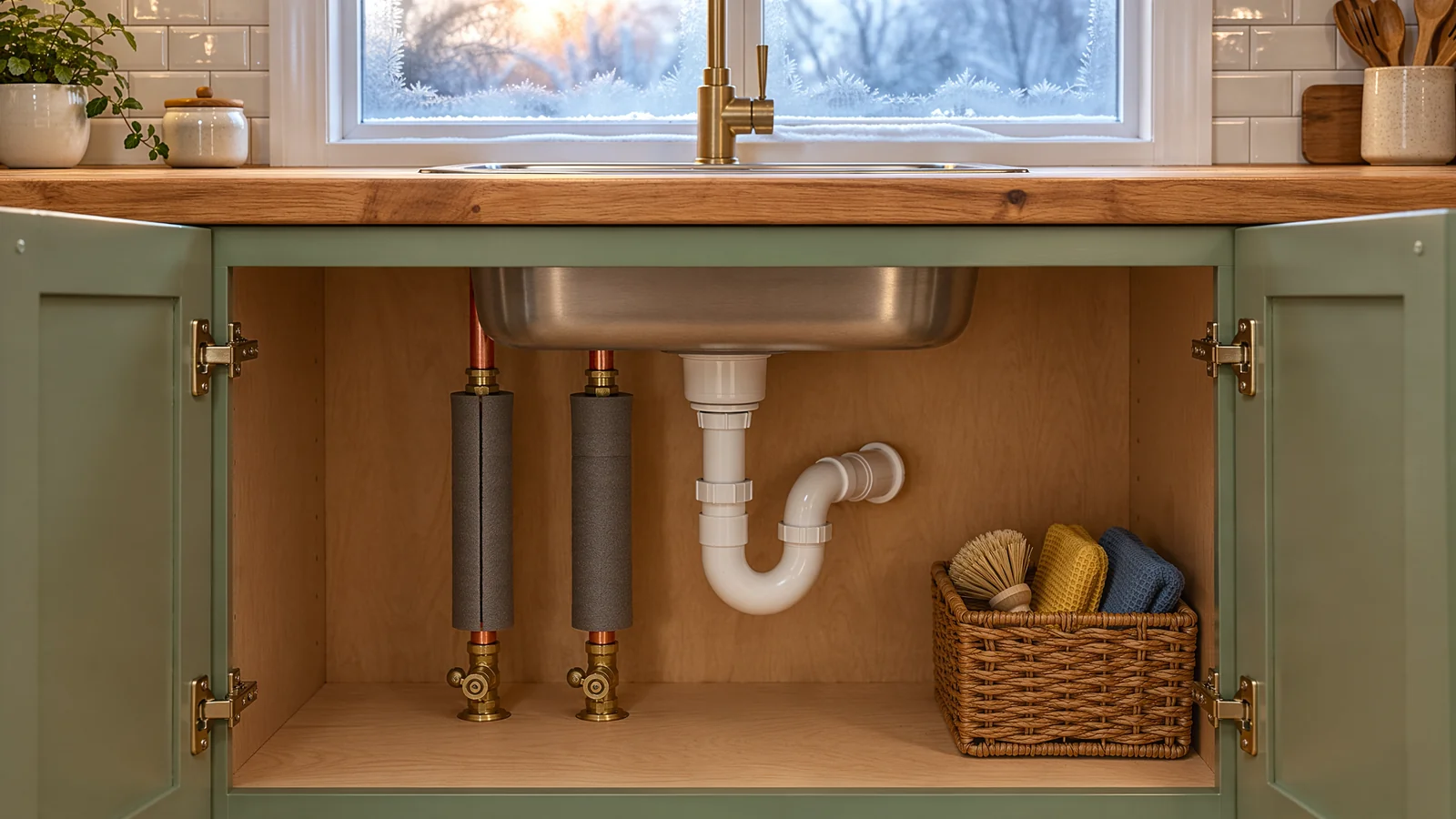
To keep pipes from freezing in an older Haddonfield home, find the pipes in cold spots now, insulate them, shut off and drain outdoor faucets, and keep the heat steady at no lower than 55 degrees when you're away. On very cold nights, let a faucet on exposed pipes trickle. That's the core advice from the American Red Cross and New Jersey American Water, which supplies the borough's water.
Older houses have more cold corners. Do this before the first real cold snap.
Where pipes freeze first
The Red Cross lists the usual suspects:
- Outdoor hose bibs, sprinkler lines and pool supply lines
- Pipes in unheated spaces: basements, crawl spaces, attics, garages
- Pipes inside kitchen and bathroom cabinets, especially on outside walls
- Pipes that run along exterior walls with little or no insulation
Also check where your water service comes in through the foundation, another likely freeze point, per the Red Cross.
Before it gets cold
- Find your main shut-off valve. If a pipe freezes or bursts, shut the water off right away, New Jersey American Water says. Tag the valve.
- Outdoor faucets. Drain and store hoses. Close the inside valve to each hose bib, then open the outside tap so leftover water can drain, the Red Cross says.
- Insulate. Wrap exposed hot and cold lines with foam pipe sleeves or UL-listed heat tape.
- Outside meter pit? Keep the lid closed tightly. If snow covers it, leave it. Snow insulates, New Jersey American Water says.
When it's below freezing
- Open sink cabinet doors so warm room air reaches the pipes.
- Let cold water trickle from faucets on exposed pipes. Even a trickle helps, the Red Cross says.
- Skip the nighttime thermostat setback during a cold snap.
- Going away? Leave the heat at 55 degrees or higher and ask a neighbor to check in. New Jersey American Water also suggests a freeze alarm that calls you if the inside temperature drops below 45 degrees.
If a pipe freezes
New Jersey American Water's advice is to shut the water off first, since freezing can crack pipes and joints you can't see. Then warm the pipe with a hair dryer, an attended space heater, a heating pad or hot, wet towels. When it's thawed, turn the water back on slowly and look for leaks. The Red Cross version keeps the faucet open while you warm the pipe so melting water can run through. Either way, warm it gently.
Never use an open flame. No blowtorch, kerosene or propane heater, or charcoal stove, the Red Cross says, and New Jersey American Water warns against kerosene heaters and open flames too. If you can't find the frozen spot or can't reach it, call a licensed plumber. Then check your other faucets.
Whose pipe is it?
In Haddonfield, New Jersey American Water handles water service and the sewer collection system, the borough says. The utility owns the line from the main to the curb stop; you own the rest, plus everything inside. It owns the meter, but you must protect it from freezing. Call 1-800-272-1325 for water service questions.
See our guide to wet basements and sump pumps in older Haddonfield homes, and our checklist for smoke and CO alarms in older homes.
Sources
- American Red Cross: Frozen Pipes (read Nov. 24)
- New Jersey American Water, winter pipe tips, Dec. 4, 2024
- New Jersey American Water, winter storm tips, Jan. 23, 2026
- New Jersey American Water: Rights and Responsibilities
- Borough of Haddonfield: Water and Sewer (read Nov. 24)
Want more practical home help like this, plus the week's Haddonfield news in one short read? Get the Friday newsletter. Subscribe here.
FAQ
- Who supplies water in Haddonfield?
- New Jersey American Water treats and delivers the water and maintains the distribution and sewer collection system in the borough, per the borough's Water and Sewer page. Its customer service line is 1-800-272-1325.
- What temperature should I leave the heat at when I'm away?
- No lower than 55 degrees, according to both the American Red Cross and New Jersey American Water.
- Should I drip my faucets?
- When it's very cold, letting a faucet on vulnerable pipes trickle helps, both the Red Cross and New Jersey American Water say.
Get Live Haddonfield in your inbox
The best of life in 08033, every Friday. Free.
Subscribe on SubstackMore from Homes & Design
- Smoke and Carbon Monoxide Alarms in an Older Haddonfield Home: What NJ Requires in 2026 and Where They Go
Older Haddonfield houses have boilers, chimneys and attached garages, and a lot of them still have old alarms. Here's what state rules require and where each alarm belongs.
- New Haddonfield Listing: 177 Upland, a Gill Tract Rancher With a Finished Lower Level for $1,599,000
A custom stone and brick rancher on a corner lot near Tavistock, listed Nov. 23. Here are the numbers, the taxes and who to call.