Interiors
Warm Light for a Dark Winter: LED Bulbs, Dimmers and Old Wiring in a Haddonfield Home
Look for 2700K, read lumens not watts, and match the dimmer to the bulb. Plus the switch and outlet warning signs that mean it's time to call an electrician.
Get Live Haddonfield free every Friday. Subscribe.
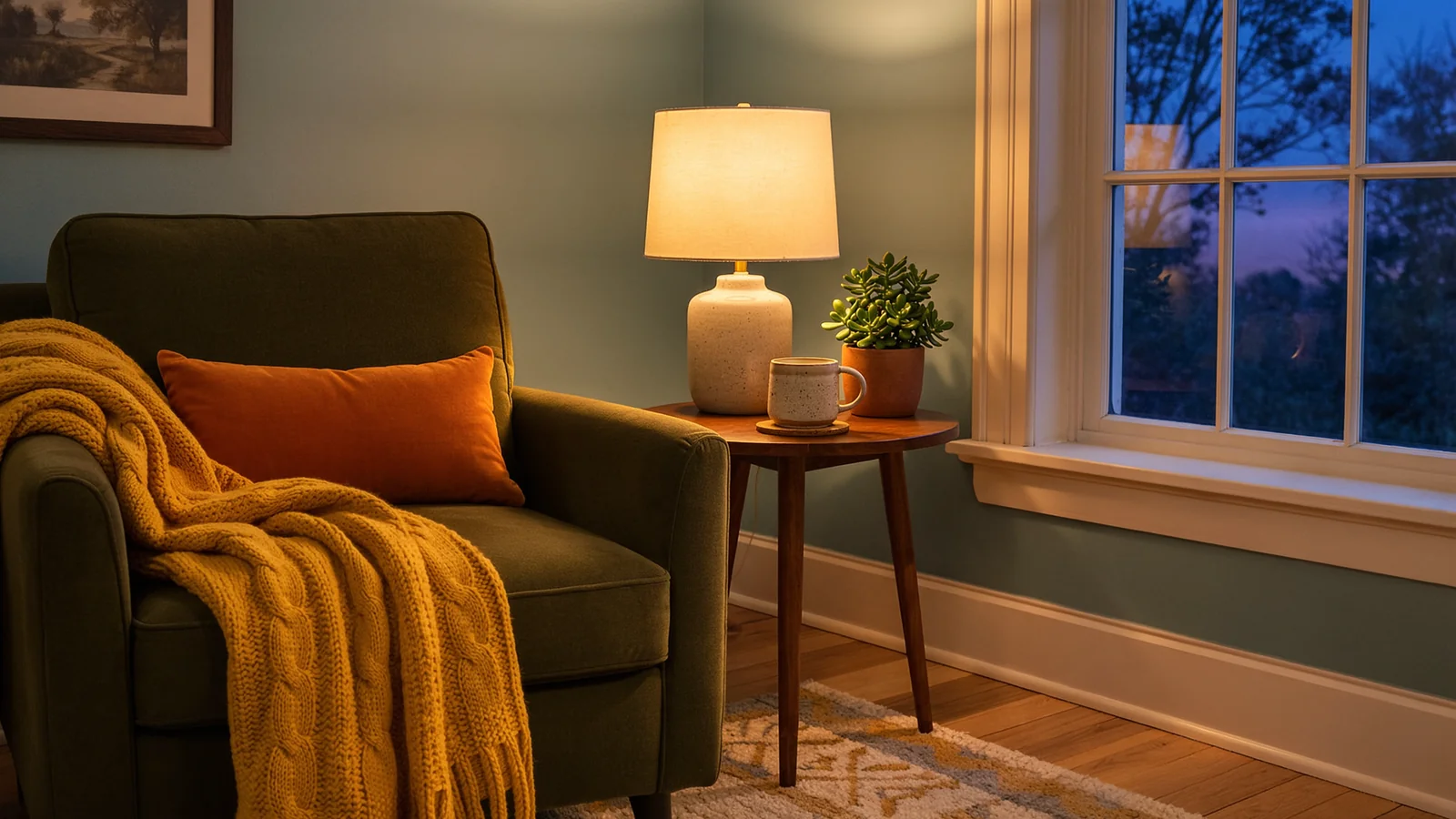
By 5 p.m. in late November, Haddonfield is dark. The right bulbs can make a room feel warm instead of harsh. Pick LEDs by lumens and a low Kelvin number, match them to your dimmer, and watch for the switch and outlet warning signs that an older home's wiring needs a look.
Warm or cool? Read the Kelvin number
The color of light is measured on the Kelvin scale. ENERGY STAR's bulb guide says lower numbers mean warmer, more yellow light and higher numbers mean cooler, bluer light.
Its chart breaks it down like this:
- About 2200K to 3000K: soft white, warm white. ENERGY STAR calls this ideal for most indoor rooms. This is the cozy, lamp-at-dusk look.
- About 3500K to 4100K: neutral or cool white. Good for kitchens and work spaces.
- About 5000K to 6500K: daylight. Good for reading. Think blue sky at noon.
For a living room or bedroom in winter, start at the warm end. A cool bulb in a table lamp is usually what makes a room feel like an office.
Brightness is lumens, not watts
Watts measure energy used. Lumens measure light. ENERGY STAR's guide lists the minimum lumens to match old incandescent bulbs:
| Old bulb | Minimum lumens |
|---|---|
| 40 watts | 450 |
| 60 watts | 800 |
| 75 watts | 1,100 |
| 100 watts | 1,600 |
| 150 watts | 2,600 |
ENERGY STAR says to find the lumens you need, then pick the bulb with the lowest wattage. Also check the package for where a bulb can go, since shapes and uses vary.
Making dimmers work with LEDs
Dimmers are the cheapest way to make a room feel warmer at night. They're also where LEDs misbehave.
ENERGY STAR's dimming guide gives three tips:
- Look for "dimmable" on the front of the package. Every dimmable ENERGY STAR LED says so.
- Match the bulb and dimmer. Not every bulb works with every dimmer. If you're putting in a new dimmer, check the website on the bulb package for recommended dimmers.
- Be ready to try a different bulb. If the match is bad, change the switch or return the bulb.
Certified dimmable bulbs dim to at least 20% of their light and carry a 3-year warranty, per the guide. The Electrical Safety Foundation International (ESFI) adds that LEDs need to be dimmer compatible, and that light switches should be installed by a professional.
Old wiring: the warning signs
If your Haddonfield house is older than the gadgets you plug into it, this part is for you. ESFI notes that about half of U.S. homes were built before 1973, before many of today's appliances and electronics existed.
ESFI's switch safety sheet lists signs that call for an inspection by a qualified electrician as soon as possible:
- A wall plate that's hot to the touch, or discolored around the switch
- Lights that dim or flicker for no reason, or change when an appliance turns on
- A shock when you use the switch
- A switch that leans or feels loose
- An odor when a switch is used
- Crackling, popping or buzzing from an outlet
- Breakers that trip or fuses that blow when a switch is turned on
ESFI also flags homes over 40 years old with aluminum wiring that haven't had a recent safety inspection. Replace cracked or missing cover plates right away.
For more on older homes in winter, see our guides to holiday decorating safety in an older home and smoke and CO alarms.
Sources
- ENERGY STAR, LED Bulbs Made Easy (PDF) (read Nov. 26, 2026)
- ENERGY STAR, Learn About Brightness
- ENERGY STAR, Your Guide to Dimmable LED Lighting (PDF)
- ESFI, Switch to Safety (PDF)
- ESFI, Know the Dangers of Your Older Home (PDF)
Each Friday the newsletter rounds up one practical fix for an older Haddonfield house, plus the week's local news. Subscribe here.
FAQ
- What color temperature is warm white?
- ENERGY STAR's bulb guide puts soft white and warm white at the low end of the Kelvin scale, roughly 2200K to 3000K, and calls them ideal for most indoor uses.
- How many lumens replace a 60 watt bulb?
- At least 800 lumens, per ENERGY STAR. A 40 watt bulb is 450 lumens and a 100 watt bulb is 1,600.
- Why does my LED flicker on a dimmer?
- Not every LED works with every dimmer. ENERGY STAR says to check the bulb maker's list of recommended dimmers and be ready to try a different bulb or switch.
Get Live Haddonfield in your inbox
The best of life in 08033, every Friday. Free.
Subscribe on SubstackMore from Homes & Design
- Feeding Winter Birds in Haddonfield: Which Seed, Which Feeder, Native Plants and What to Skip
Black-oil sunflower, a clean feeder and a few native shrubs with winter fruit. Here's what Cornell and Rutgers say works, and what to leave out.
- Smoke and Carbon Monoxide Alarms in an Older Haddonfield Home: What NJ Requires in 2026 and Where They Go
Older Haddonfield houses have boilers, chimneys and attached garages, and a lot of them still have old alarms. Here's what state rules require and where each alarm belongs.